
Appinio Conversations

B2B • SaaS • AI

Reimagining qualitative research with AI-powered persona chats

Appinio has traditionally focused on quantitative research, helping brands run large-scale studies with consumer data gathered through the Appinio App. With Conversations, we expanded into qualitative research with AI-powered focus groups grounded in real research data and methodology. The goal was to help researchers stress-test early ideas, uncover new directions, and sharpen hypotheses before moving into a quantitative research project.

As part of a small, high-paced team of product designers, AI engineers, and research experts, I helped shape Conversations from 0 to 1, working across product architecture, design system, and the interaction patterns that make AI-powered research feel intuitive and trustworthy.

Work
Product Design • AI Experience Design
Role
Sr. Product Designer @ Appinio
Timeline
2025–Today
Tech
Web • Appinio Research Platform
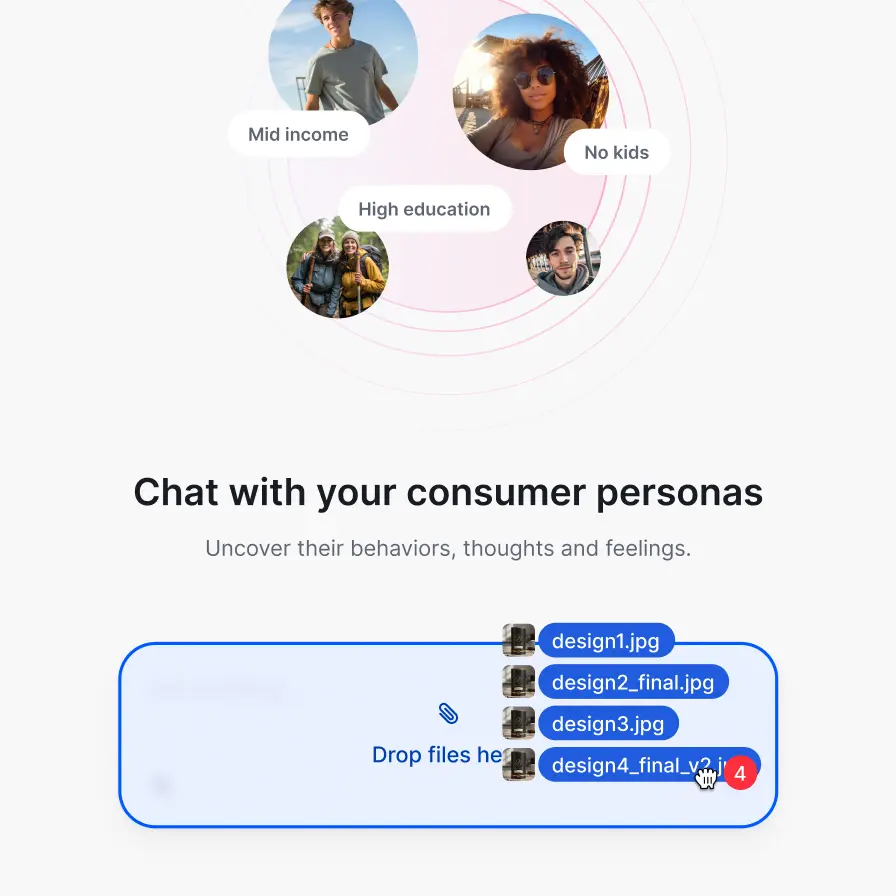
Appinio Conversations media upload in chat

Starting with a question, instead of setup

Qualitative research often starts with a lot of setup before researchers can ask their first question. We wanted to remove that friction and get researchers to their first valuable insights as quickly as possible.

The experience therefore starts with a simple input field for the first question to ask the focus group, with the option to upload media stimuli like concepts or designs. Advanced options for configuring the personas appear in the next step. This progressive approach creates momentum through a quick first action, reduces cognitive load, and keeps researchers focused on what they want to learn rather than setup they don't need yet.
Grounding synthetic personas in real research

The next step is choosing who to chat with about the topic. Researchers can select from pre-built groups based on:

  • Psychographics developed with Cronbach
  • Socio-demographics from Appinio's own research data
  • Real past consumer behavior

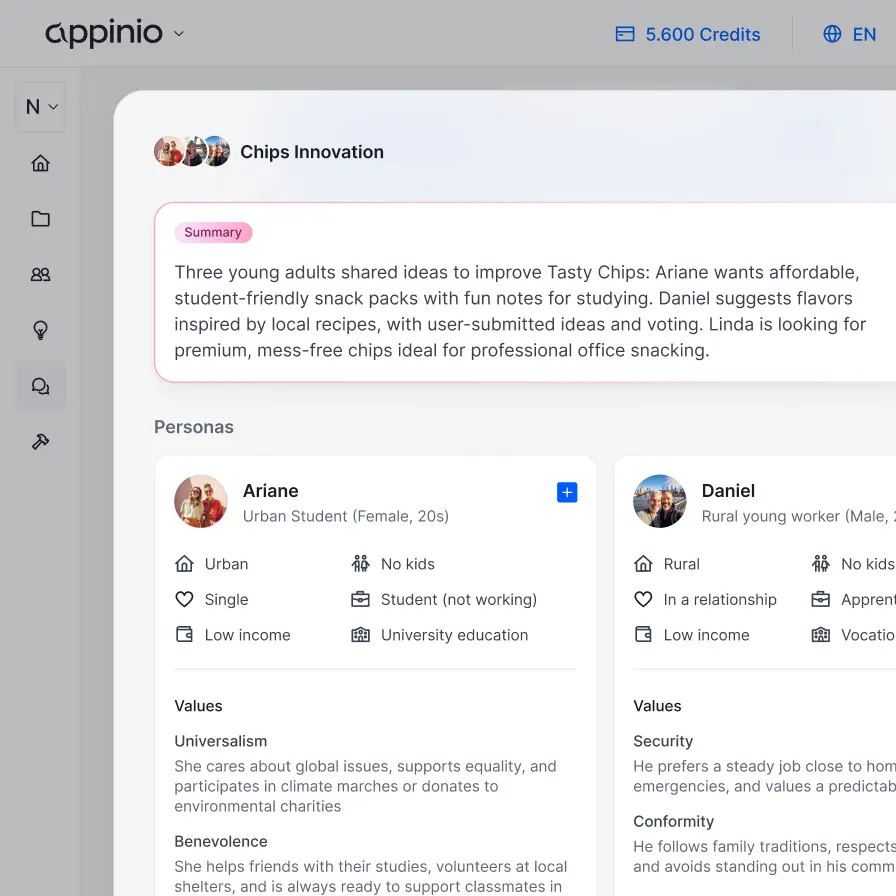
Rather than generating generic AI characters, these personas are based on a solid scientifically- and data-proven methodology. The groups can then be tailored by adding or removing individual personas, combining personas from different groups, or extending them with custom input. The entire setup happens directly within the chat history, creating a seamless transition from the first question to the focus group's first response.

Making synthetic user interaction feel human

To make synthetic personas feel natural to interact with, we borrowed familiar patterns from human messaging. Each persona has a name, profile picture, personality traits, and a distinct tone of voice, while responses appear at different speeds with typing animations to create a more natural conversational rhythm.

Together, these details make the experience feel less like interacting with an AI system and more like having a conversation with a group of people, while keeping the underlying research context visible.

Giving researchers control to probe deeper

The most valuable insights often emerge when researchers follow up on an interesting reply instead of simply moving on to the next question. Conversations therefore needed to support exploration, not just generate answers.

We made it easy to reply to specific personas, tag them directly, and ask follow-up questions, while AI-generated suggestions help researchers discover where to probe next. This gives researchers control over the conversation while reducing the effort of figuring out what to ask next. This makes it easier to uncover the unexpected insights behind an initial answer.

Appinio Conversations chat history Appinio Conversations multiple source citations in conversation Appinio Conversations single source citation in conversation Appinio Conversations AI-generated summary

Designing for trust, context and continuity

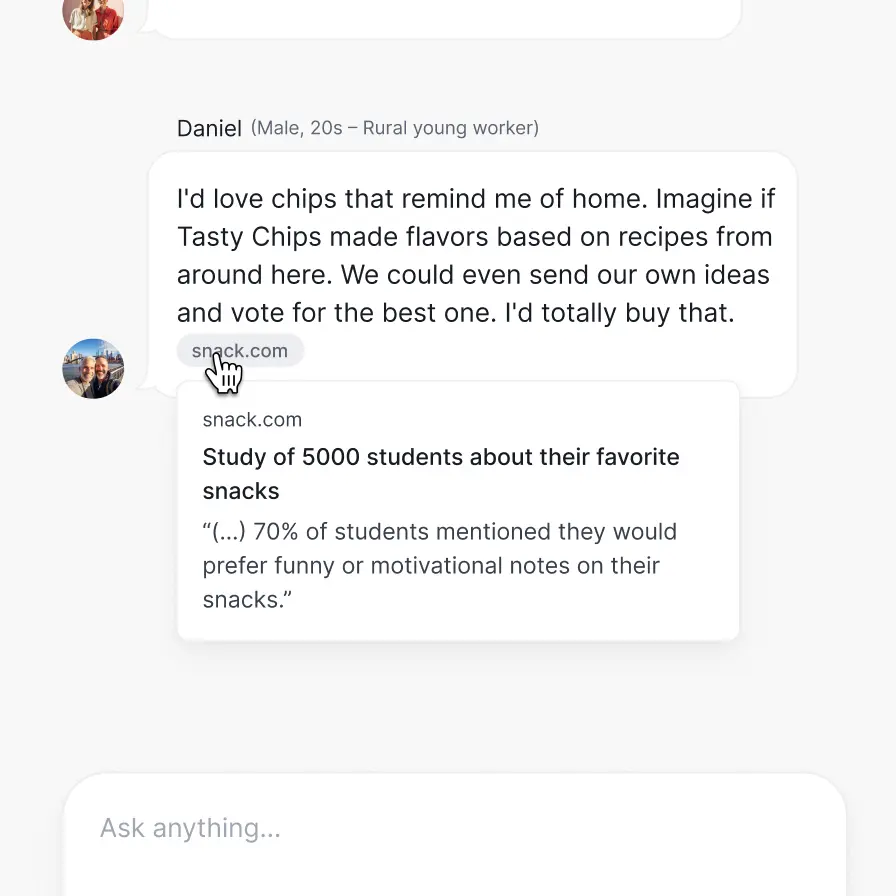
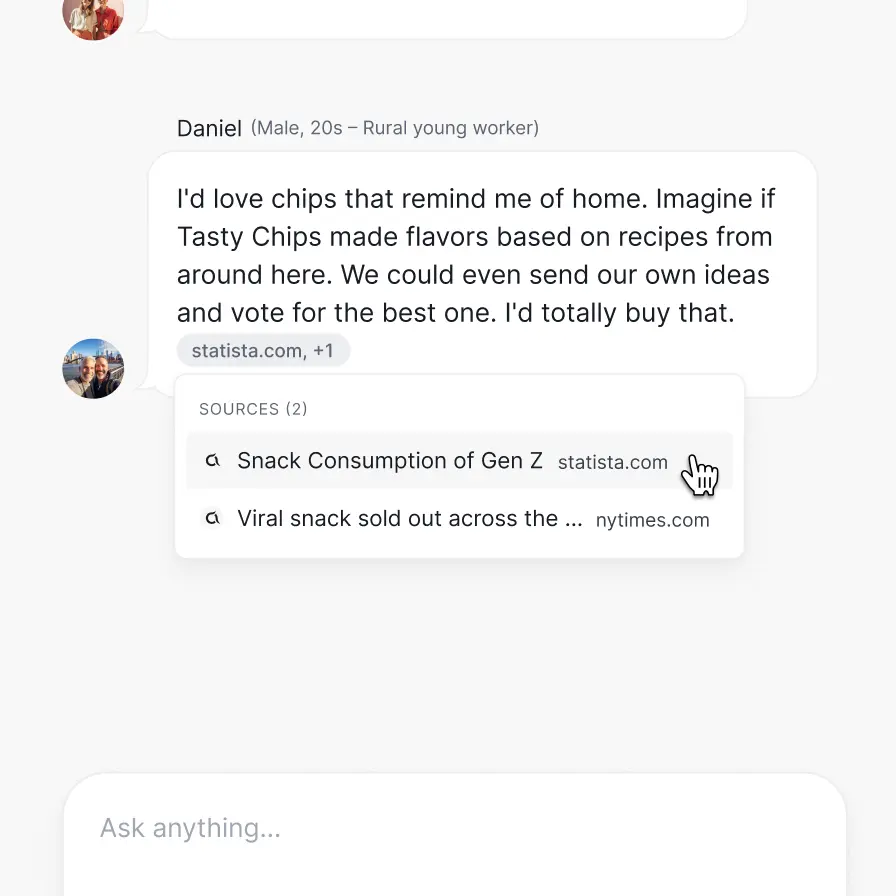
Trust is essential when researchers use AI to inform real decisions. When personas use internet-based sources, we surface them directly in the conversation so researchers can verify the information and understand where an answer comes from.

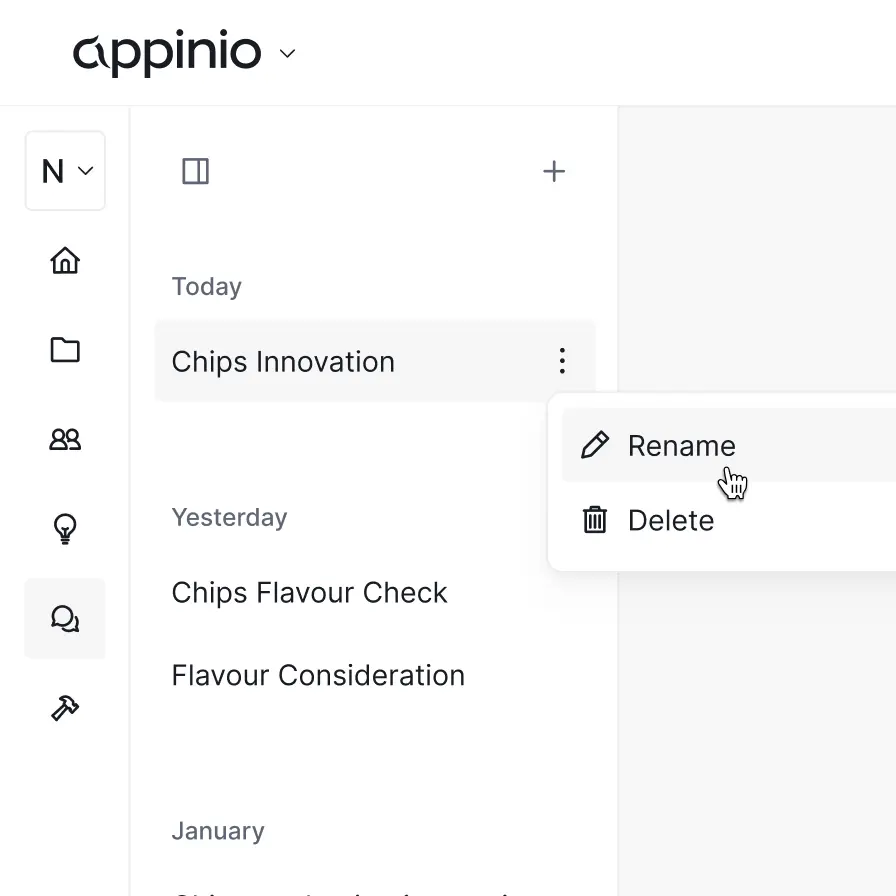
The focus group also stays editable throughout the conversation, allowing researchers to add or remove personas as new directions emerge. An AI-generated summary captures key insights, while the history sidebar makes it easy to revisit and organize past conversations. Together, these features preserve context across the research process and make insights easier to return to, share, and build on.